Translated automatically from the original (Português). The original is the binding text.Show original
The Lula government's fiscal adjustment package (PLP 299/2026) does not cut funding for health and education
Federal government / Bruno Moretti, Minister of Planning and Budget· claimed on Nov 14, 2026 · original source
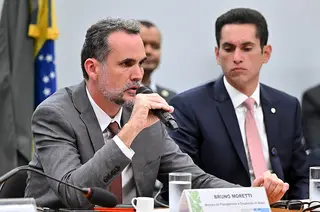
Planning Minister Bruno Moretti defended, on 11/11/2026 at the Joint Budget Committee (CMO), an adjustment of about R$ 60 billion for 2027 (PLP 299/2026) and, in a video released by the government on 14/11, said there is "disinformation," that the bill guarantees rights, and that health will receive about R$ 20 billion more in 2027. The Senate approved the main text on 12/11 by 45 to 31; the highlighted amendments were left for 17/11, and the text then goes to the Chamber of Deputies. The opposition and part of the left say the package cuts health and education; the minister himself confirmed that one of the measures removes extraordinary oil revenues from the accounts used to calculate the minimum spending floors for those areas. An official estimate of the health floor with and without this exclusion, the final text approved by the Chamber, and the execution of the 2027 budget would settle the question.
In the government video, Moretti promises about R$ 20 billion more for health in 2027
According to InfoMoney, the minister said in a video on the official networks (14/11) that the bill "guarantees rights, ensures social rights, balance in public accounts and fights privileges," that the 2027 Budget already provides for an increase of about R$ 20 billion for health, and that the real gains in the minimum wage and pensions are preserved. The report notes that, regarding super-salaries, the Senate text only sets a 120-day deadline for Congress to regulate the issue.
Column: health and education floors are protected from spending freezes, but there is a sensitive point
Matheus Leitão's column in Metrópoles states, regarding the claim that the package cuts health and education, that "the text does not do that": social security and welfare benefits, civil servants' salaries, and the health and education floors are protected from spending freezes, and the main source of savings is the reduction of tax incentives. The same column points to the removal, until 2030, of extraordinary oil revenues from the calculation of the federal health floor as a "sensitive point of fact," which Moretti's video does not mention.
In the CMO, the minister himself confirmed the removal of extra oil revenues from the floor calculations
Agência Senado reports that Moretti cited among the measures "the removal of extra revenues from oil gains from the accounts of the floors for health and education spending," arguing that extraordinary revenues "should not be the basis for funding expenses that are mandatory" and that this is not a new measure. He estimated the health floor at R$ 272.2 billion and education at R$ 141.2 billion (R$ 2.4 billion above the floor) in 2027; the text does not state what the floor would be without the exclusion.
Senado FederalMinistro do Planejamento anuncia na CMO ajuste fiscal de R$ 60 bi em 2027O ministro do Planejamento e Orçamento, Bruno Moretti, defendeu nesta quarta-feira (11) a aprovação de projeto de lei complementar (PLP) com medidas de ajuste fiscal para 2027, com impacto de R$ 60 bilhões. O valor equivale a pouco mais de um quarto das despesas não obrigatórias de todo o Orçamento.
Text approved in the Senate expands spending blocks and provides for de-earmarking of funds without detailing which ones
According to Agência Senado, the substitute approved on 12/11 allows the government to block more expenses in order to reach the center of the target (0.5% of GDP in 2027), even within the tolerance margin. Rapporteur Eduardo Braga estimates an improvement of R$ 100 billion in the golden rule margin through the de-earmarking of funds that have specific allocations, but, as the Agency itself notes, "the text, however, does not detail how this de-earmarking will be carried out."
Senado FederalTexto principal do ajuste fiscal é aprovado pelo SenadoO Plenário do Senado aprovou, nesta quinta-feira (12), o texto principal do projeto de ajuste fiscal do governo ( PLP 299/2026 ). O texto aprovado, por 45 votos a 31, foi um substitutivo do senador Eduardo Braga (MDB-AM) ao projeto apresentado pelo senador Jaques Wagner (PT-BA) a pedido do Executivo